



30 Jul 2025 OWASA vs. Chantal: Prepared, Reflective, Grateful
In the halls of OWASA this week, you’ll hear people say they have never seen flooding like our community experienced with Tropical Depression Chantal in the 30-plus years they have lived or worked here. You’ll hear stories shared about loved ones whose homes or businesses were badly damaged or destroyed. You might also overhear conversations about readiness: how many things went right; and what could go wrong next time.
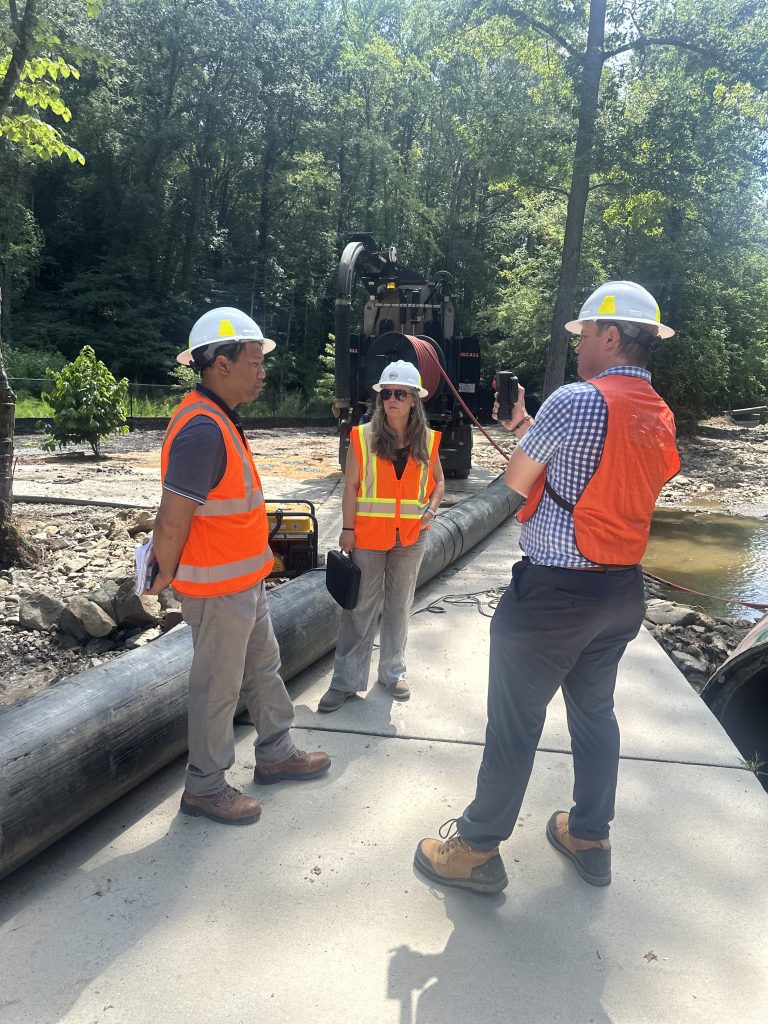 What you will not hear are sighs of regret. OWASA went into July 6 like many in our community: not expecting a 500-year flood. Still, thanks to our safety programs, emergency plans, and working to maintain a constant state of readiness for nature’s biggest challenges, our community’s water and wastewater infrastructure fared well, and OWASA was able to continue delivering clean water and treating wastewater throughout the storm.
Ultimately, two sanitary sewer overflows (SSOs), one along Bolin Creek and one on Morgan Creek, were stopped in 24 and 36 hours respectively. Once the damaged pipes were safely accessible by OWASA crews, repairs stopped an additional 795,900 gallons of untreated wastewater from entering Morgan Creek and tens of thousands of gallons diverted from Bolin Creek.
The Mason Farm Wastewater Treatment Plant sustained flooding that damaged the electrical system serving the UV disinfection section– the last step in OWASA’s wastewater treatment process. Fortunately, the system maintained one working UV channel, and, despite extra water due to storm and flood waters entering the plant, our plant operators were able to divert all wastewater through the working channel within 5 hours of the electrical damage.


One of the most impressive impacts that Tropical Depression Chantal delivered was the water level at Univeristy Lake. The reservoir’s water level reached 93 inches above the flashboards– that’s nearly eight feet of water spilling over the dam. This crept close to water levels that would call for evacuations downstream of the dam. While we are very grateful the water began to recede before evacuations were needed, we are taking the stress the dam sustained very seriously. Subsequent assessments by OWASA’s engineers found no dam safety issues at Univeristy Lake, and identified a few areas for further investigation after water levels recede.
Recreation took a big hit at University Lake, where the fishing dock was damaged and silt and debris filled the lake. After a two-week recovery period, University Lake re-opened for recreation on July 25. UNC’s Club Crew team lost boats and their dock at University Lake, damage that threatened to cancel or delay their season. All visitors are encouraged to be very cautious when boating due to underwater hazards that will persist following the storm.
Across Chapel Hill and Carrboro, cleanup is well underway of lots of debris and sediment deposited by the storm. We are finding rocks and boulders in strange places, rerouted streams, tree limbs, leaf debris, and trash in places that were once pristine. We’ve removed entire dumpsters resting on pipes crossing creeks, and boulders lodged in sewer collection pipes. In addition, several sewer collection access covers (i.e. manhole covers) where swept away by flood waters. Our crews have restored these covers thanks to helpful reports from the public of missing covers and covers deposited in the wrong places, and our crews diligently surveying infrastructure for anything out of place.
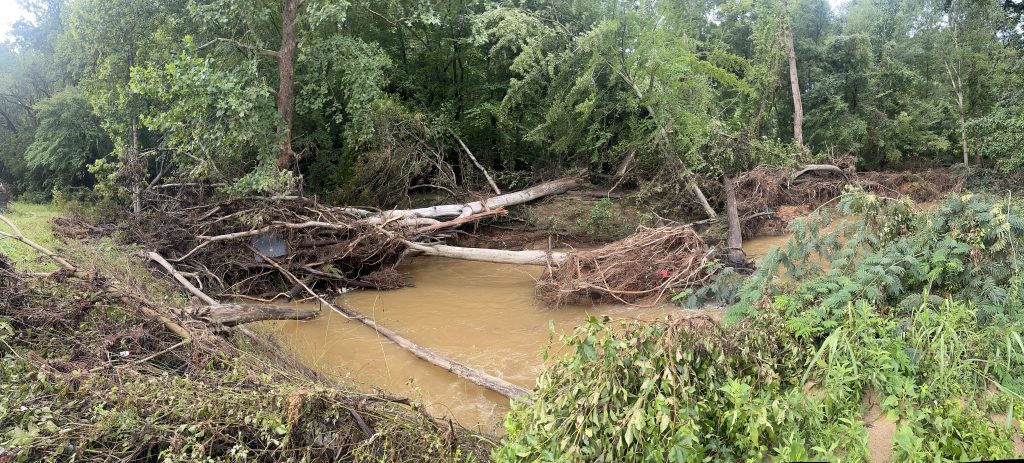
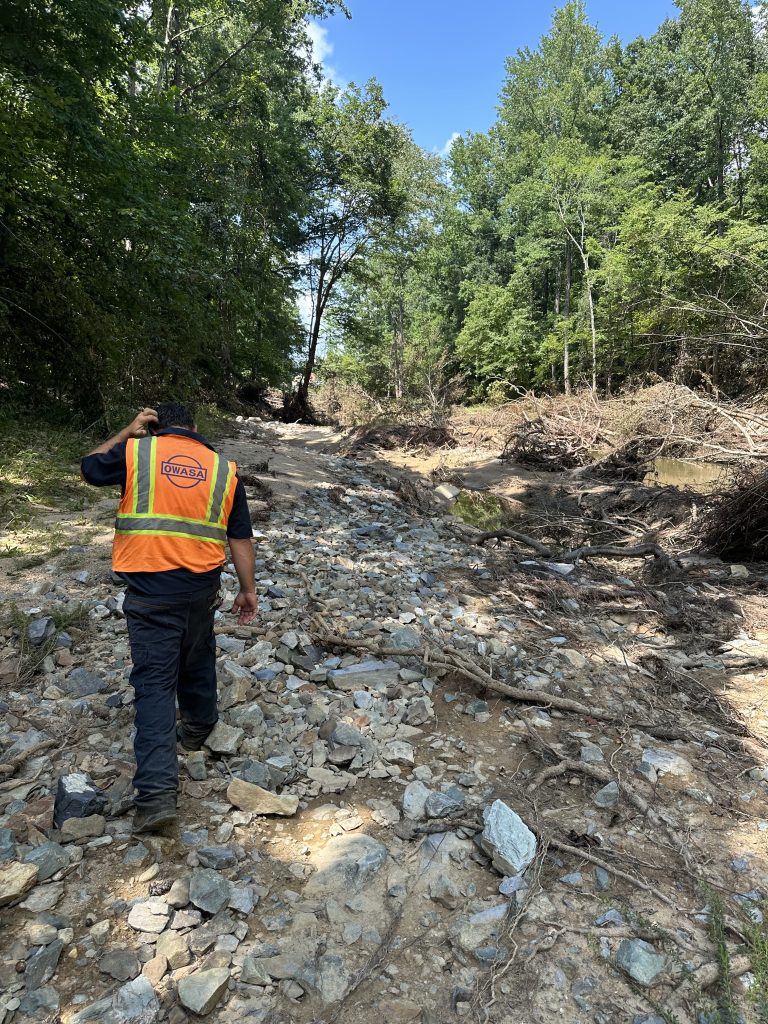
As one could imagine, OWASA easements on properties across the service areahave experienced erosion, downed trees, and other debris. We have compiled information on this damage and are working to systematically clear these areas.
After the storm, OWASA staff conducted an After Action Review to look at how all the impacts of Chantal on OWASA employees, facilities, and other infrastructure unfolded. In this review, we reaffirmed the importance of our focus on safety and preparedness. We got to the root of hiccups experienced as the events of the storm unfolded and identified action plans to improve those before we face another impactful storm.
We are so grateful that our community’s water and sewer infrastructure fared as well as it did. Permanent repairs will take time. Cleanup will take time. But in the meantime, we are glad we are able to continue to serve Chapel Hill and Carrboro with the level of care you have come to expect from your water and sewer service providers here at home.
If you have questions or have seen damaged or misplaced infrastructure, please reach out to us at info@owasa.org.