



To Top
About the Plan
The development of OWASA”s Climate Adaptation Plan is underway. Part of OWASA’s 2023-2027 Strategic Plan, the Climate Adaptation Plan will guide OWASA’s actions to prepare for organizational impacts of climate and land use changes.
OWASA is focusing on the four most likely climate threats to reliability and resiliency of OWASA’s services:
- Flooding
- Extreme Heat
- Drought
- Wildfire

Identifying Climate Threats
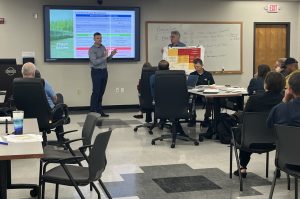
OWASA held a kick-off workshop in May 2025. Staff from departments across the organization:
- Reviewed existing climate hazard exposure to the four climate hazards expected to affect our area most: rainfall flooding, extreme heat, drought and wildfire
- Discussed future trends related to the four climate hazards; and
- Collected initial feedback from staff for the development of the climate impact assessment.
The workshop included a review of regional climate hazards; an overview of climate impact trends and how these may affect OWASA assets and operations; and breakout exercises to explore how sensitive we expect various assets to be to each hazard, and potential cascading consequences of assets being impacted by each hazard.
Consultants shared techniques for adapting to extreme heat that have been employed by utilities in higher temperature locations, including reducing water use for lawn care and landscaping; large HVAC units at facilities to relieve equipment from heat failure; and pumping facilities built into natural features like hillsides to utilize natural insulation from heat.
Maps showing drought-vulnerable areas were presented, and the use of OWASA-maintained records of reservoir levels to understand conditions that cause low water levels were discussed. OWASA staff and consultants explored potential impacts on OWASA assets from the four climate hazards.
Assessing Infrastructure and Service Vulnerabilities
At the second employee workshop, held in September, consultants presented a draft prioritized list of vulnerabilities to OWASA staff. Staff analyzed potential impacts on specific infrastructure types, like water towers or pump houses, and identified vulnerable infrastructure that should be added for consideration for each climate hazard.
Coordinating with Community
Ensuring that our community is prepared to adapt to the impacts of climate change is a group effort. OWASA is working with our local government partners and UNC to communicate and coordinate on climate adaptation.
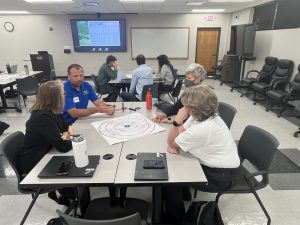
On October 2, 2025, we hosted a workshop with partners from UNC-Chapel Hill, the towns of Chapel Hill and Carrboro, and Orange County, to discuss OWASA’s progress in developing its Climate Adaptation Plan, and identify opportunities for collaboration across the community.
Group discussion and breakout sessions identified potential impacts to infrastructure, environment, and society that is shared by our communities and ways that stakeholders can work together to improve resiliency in all areas.
Next Steps
- Understand the threat of climate change on OWASA’s infrastructure, operations, and services
- Identify and prioritize action plans to increase the resiliency of the community’s water and wastewater system to the threat of climate change
- Implement action plans
Stay tuned here for more information as we continue developing this important plan.