



To Top
Water leaks are very common—one in ten homes has a water leak that wastes 90 gallons per day. Toilets, faucets, and irrigation systems are common culprits. Even small leaks can add up quickly, leading to high water bills. Fixing leaks promptly helps you:
- Prevent unexpected high water bills
- Avoid water waste
- Protect your home from damage

Before you have a leak:
- Confirm notifications in AguaVista. OWASA’s AguaVista portal can help you identify leaks. Log in to AguaVista today and make sure that your contact information is up to date so that you receive alerts from OWASA. You can sign up to receive emails, text messages, and/or voice calls when the system detects leaky behavior. Please make sure that you have designated OWASA’s leak alert email address (customerinquiries@owasa.org) as an approved email address.
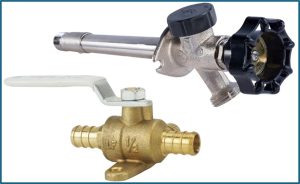
- Locate and label your water shut-off valve. Look for the main valve where the water supply enters your house—usually in the basement or in a concrete box near the street. If you have a major leak, your shut-off valve is the fastest and easiest way to avoid water loss and property damage. If you and your family are out of town and are made aware of a leak, OWASA can cut the meter off, stopping water service at your request. There may be additional charge to do this outside of normal business hours.
Leaving town?
Go ahead and shut your water off, in case there is a leak while you are gone. Please note: Drain all water from the system, including your hot water heater, if you must leave when the weather is cold. To do this, after shutting off your water, run all faucets until water stops coming out. To drain your water heater, follow manufacturer’s instructions. Remember to turn off water heater if you drain water from it.
Have a leak? Here’s where you can find it!
Look for signs of water damage on floors, ceilings, at the back of cabinets, in crawl spaces, in your yard, and around all water sources in your home, including toilets, faucets, showerheads, and irrigation systems. For toilets, listen for phantom flushes, hissing, or trickling sounds when the toilet is not in use.
- Toilets : #1 Source of Water Leaks! Place a drop of food coloring in the toilet tank. You can also use dye tablets that you can pick up at OWASA’s office, or any time you see the OWASA team at community events. If the color shows up in the bowl within 15 minutes without flushing, you likely have a leak. (Make sure to flush immediately after testing to avoid tank stains.)Toilet flappers stiffen and crack over time. Replacing this small, inexpensive item is likely to fix the leak. Make sure that you replace the toilet flapper with one made of a chloramine-resistant rubber. It’s a relatively easy DIY project that will pay for itself in no time! Here’s a video that can guide you through the process: Replacing Toilet Flapper DIY (To be sure the leak is fixed, perform the dye test again and wait a while after you flush to ensure the toilet isn’t running.)
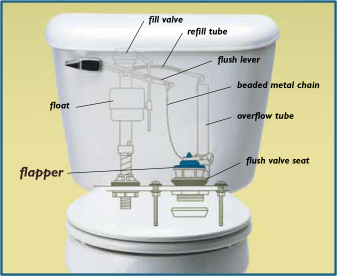
- Toilet float valve: As a toilet refills itself after each use, the water lifts a float in the tank that shuts off the water once the correct amount of water in the toilet bowl is reached. Over time, this valve may allow the water to run continuously into the tank and down the overflow tube. To see if this is happening, lift the lid off the tank of your toilet and flush. After the water has risen to a certain level, the float valve should stop the water. If the water continues to flow, or if the water is going down the overflow tube, then the float should be adjusted or replaced.
- Leaky faucet: Leaky faucets can be fixed by checking faucet washers and gaskets for wear and replacing them if necessary. Leaking showerheads can usually be fixed by ensuring a tight connection using pipe tape and a wrench. If you are replacing a showerhead, look for one that conserves water to help save money on your bill.
- Water service line: If you turn off the main water shutoff at your house and the meter is still running, you likely have a water leak in the service line between your meter and the house. Signs of a leaking water main include puddles or wet spots in your yard, reduced water pressure, or cracks in your foundation. A plumber can help repair or replace your service line. If you can, call OWASA to cut your water off at the meter to avoid wasted water and home/yard damage before the repair.
- Outside faucets or hoses: Check to see that your outside faucets are shut off completely. If they continue to drip, they may need new seals, or the faucet may need to be replaced. Other signs of a leak at your outside faucet are a hissing noise when you turn it on, or low water pressure at the faucet.
- Washing machine water lines: Look for moisture behind your clothes washer. Connections and water supply lines from the wall to the machine should be dry to the touch.
- Water softeners: Most water softeners have a “backwash” mode to clean the system periodically. When the backwash system malfunctions, it can run water through the machine and into the drain system.
- Refrigerator icemaker water lines: You will find a small water line behind the refrigerator supplying the water to the ice maker. Look for moisture behind the refrigerator, the connections, and the hose.
- Leaks in the crawlspace: A leaking or broken pipe in your crawlspace may not be noticed if water is being absorbed in the ground. Use a flashlight to look for puddles or muddy areas. Listen for running water, dripping sounds, or hissing.
- Irrigation system leaks: Sprinkler heads are often damaged by lawn mowers or weed eaters, and should be checked each season. Leaks are common on in-ground irrigation systems, and may be hard to locate.
- Pressure relief valve on hot water heater: These valves may be plumbed directly into a drain, so they could be leaking without your knowledge. If you can’t remove the drainpipe to check for leaks, try listening for a hissing sound.
- Still stumped? OWASA’s talented customer service team may be able to help you find your leak! Call OWASA Customer Service at (919) 537-4343 for assistance Or, try our leak check tool on the Agua Vista portal. We use a combination of water usage timing, water use consistency, and your history of water usage habits to help solve the mystery of where your leak may be coming from.
Account Adjustment Following a Leak
Leaks can occur, and customers are responsible for finding and repairing them promptly. In some cases, a bill adjustment may be available for unexpected water loss. To request an adjustment, provide:
- The date the leak was found
- Repair details (who completed the repair, where, and when)
- Receipts or a plumber’s bill
Adjustment amounts depend on where the water leaked:
- Indoor leaks (water enters sewer, e.g. toilet leak): Wastewater charges may be reduced by 50% of usage above your 12-month average. Water charges may be lowered to the lowest rate.
- Outdoor leaks (water does not enter sewer, e.g. service line break): Wastewater charges may be reduced by 100% of excess usage. Water charges may be lowered to the lowest rate.
- Irrigation leaks: Adjustments are based on the highest bill from the past 24 months, with limits.
Additional guidelines:
- Emergency adjustments may cover up to seven days after notification
- Limited to one adjustment every three years
- Covers one billing period
- Not available within one year of new construction
- Current contact information is required for leak alerts through Agua Vista
- Pool refills may qualify for a wastewater adjustment once per year
Please contact OWASA Customer Service to discuss the nature of your leak, provide documentation of the repair, and discuss the amount eligible for adjustment. For a full copy of OWASA’s leak adjustment policy, click here.